A participatory art letter-writing project across Boston.
It has always been important to me that my friends and family know they are loved and cared for. One way I’ve done this is by sending them letters. In an age of digital technology, writing has become so much more intimate and intentional. The letter’s physical body also becomes a tangible manifestation of care. The Snail Mail Station was born in the Summer of 2024 from my desire to share that joy with others.
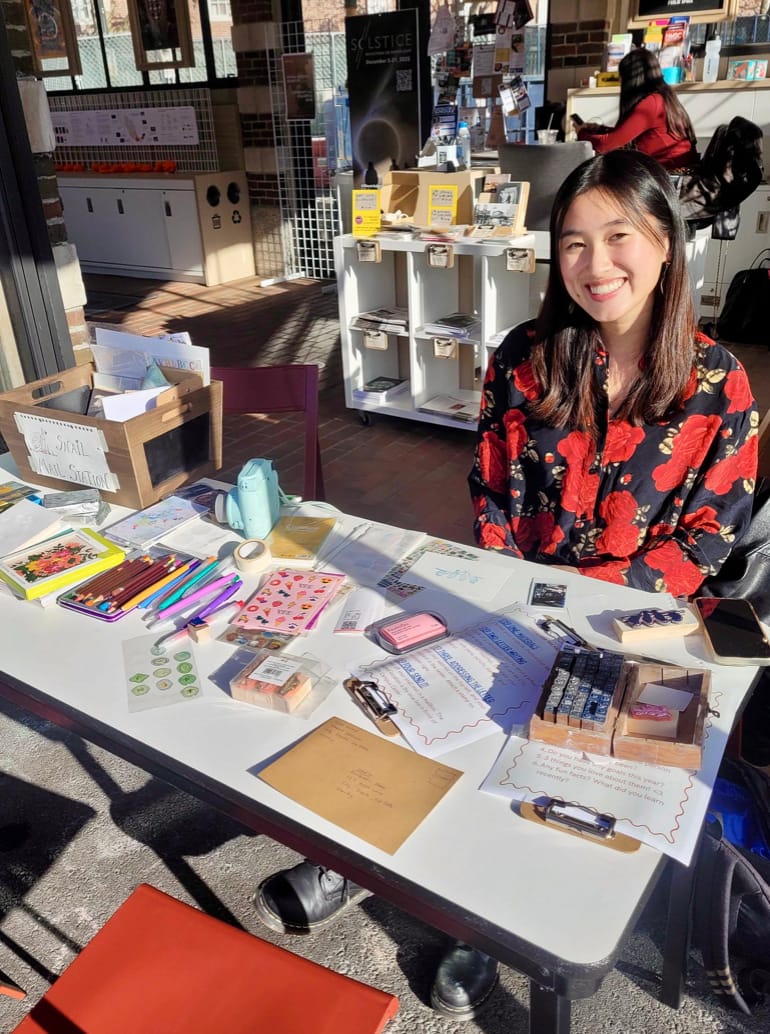
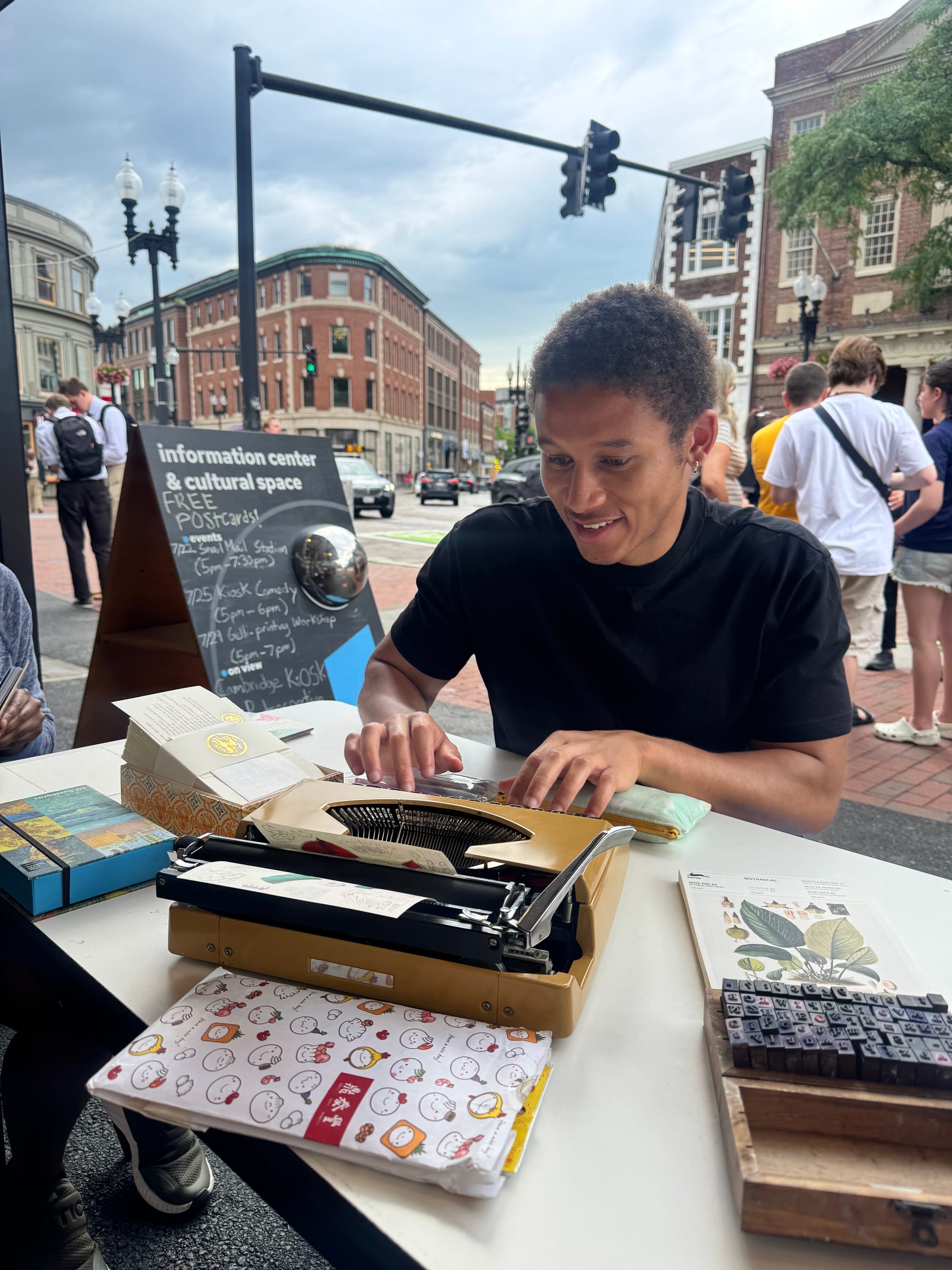
The Snail Mail Station is a growing collection of my personal collection of stamps, postcards, pens, papers, envelopes, typewriter, and small camera. I invite folks to send letters to their friends, family, lovers, mentors, and any other people they care about. It is entirely free to (1) reduce the barrier between the participant and the station, and (2) ensure the project is accessible to all ages, especially children and students.
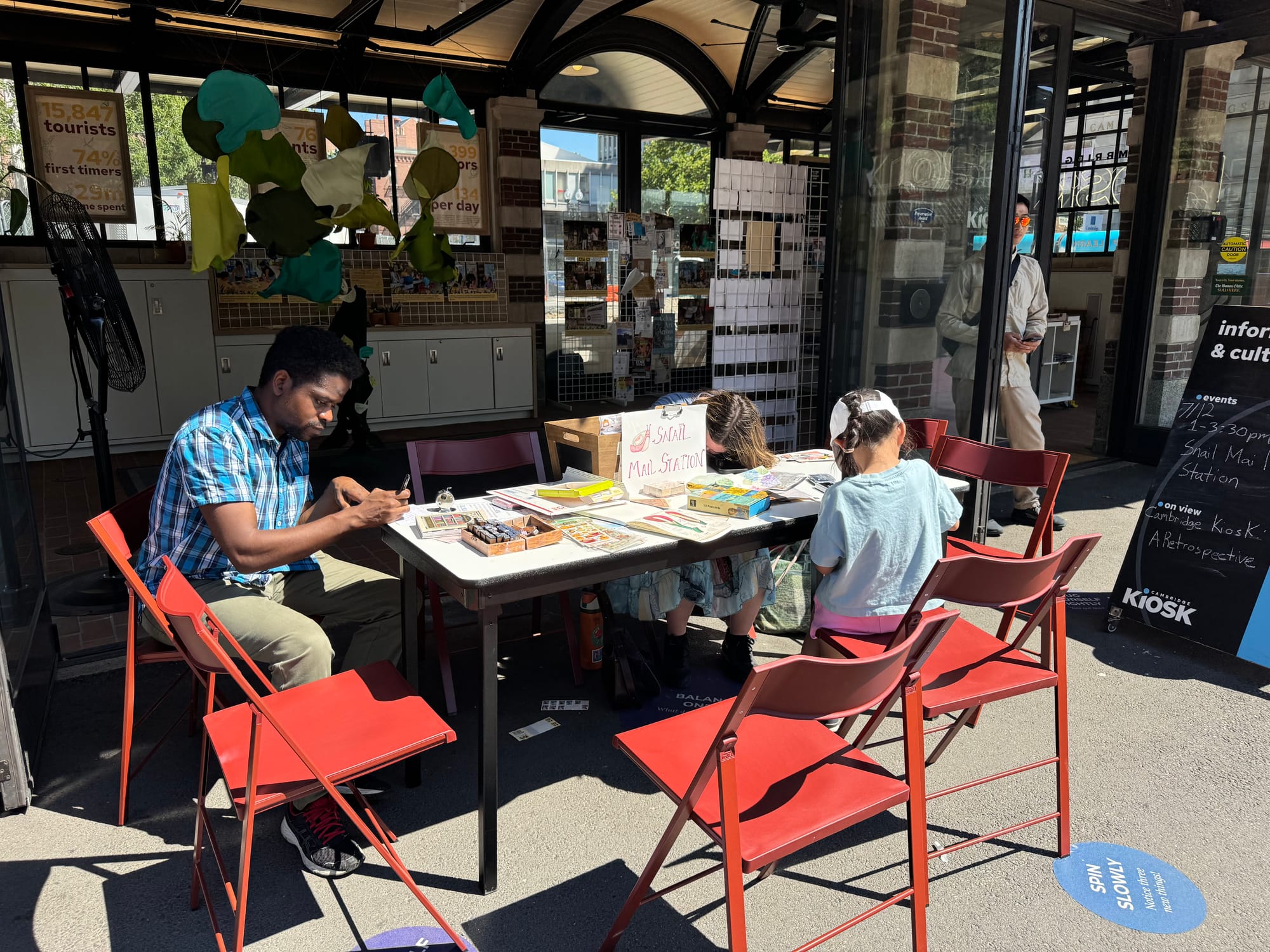
The act of inviting strangers was nerve-wracking at first, and the project proved to be as much of a psychological challenge as much as it was a physical one in the Boston summer heat. There were times when I would enter a cafe and leave because I was overwhelmed, intimidated by the thought of approaching strangers. But, to my surprise, people did stop by--on some days only two, and on others, fifteen! The goal was always to put myself out there; I repeatedly reminded myself that the worst that could happen was that they’d say no.
In time, I got the opportunity to not only meet but also listen and understand my neighbors. In just one day, I taught someone how to address an envelope, learned the dreams of a starry-eyed middle schooler, listened to the woes of a sleep deprived architect, helped a little girl send a drawing to her grandma, celebrated a student getting into graduate school, and so much more. I then shared my story in return. So much humanity was captured in these interactions and I loved it; it felt so worldly to slow down in an ever-changing place. I would continue to bump into the folks I had met in the remaining summer, and it was in these secondary interactions where I felt even more fulfilled, experiencing the community I was able to create.
I'm continuing to table at the Cambridge Kiosk and in local parks, and thinking more about how small, designed moments of slowness can help people feel more connected to the neighbors and strangers around them.